A refrigerator can appear clean in a single glance. The shelves may look clear, the interior may look bright, and the door may present as orderly. That first impression matters—but at Englair, it is never the full standard.
A professional result has to hold up when the obvious surfaces stop being the only surfaces being inspected. Shelf supports, molded ledges, removable components, glass edges, door bins, lower recesses, corners, and the areas hidden by everyday storage all contribute to the true condition of the appliance.
At first glance, everything can look fine
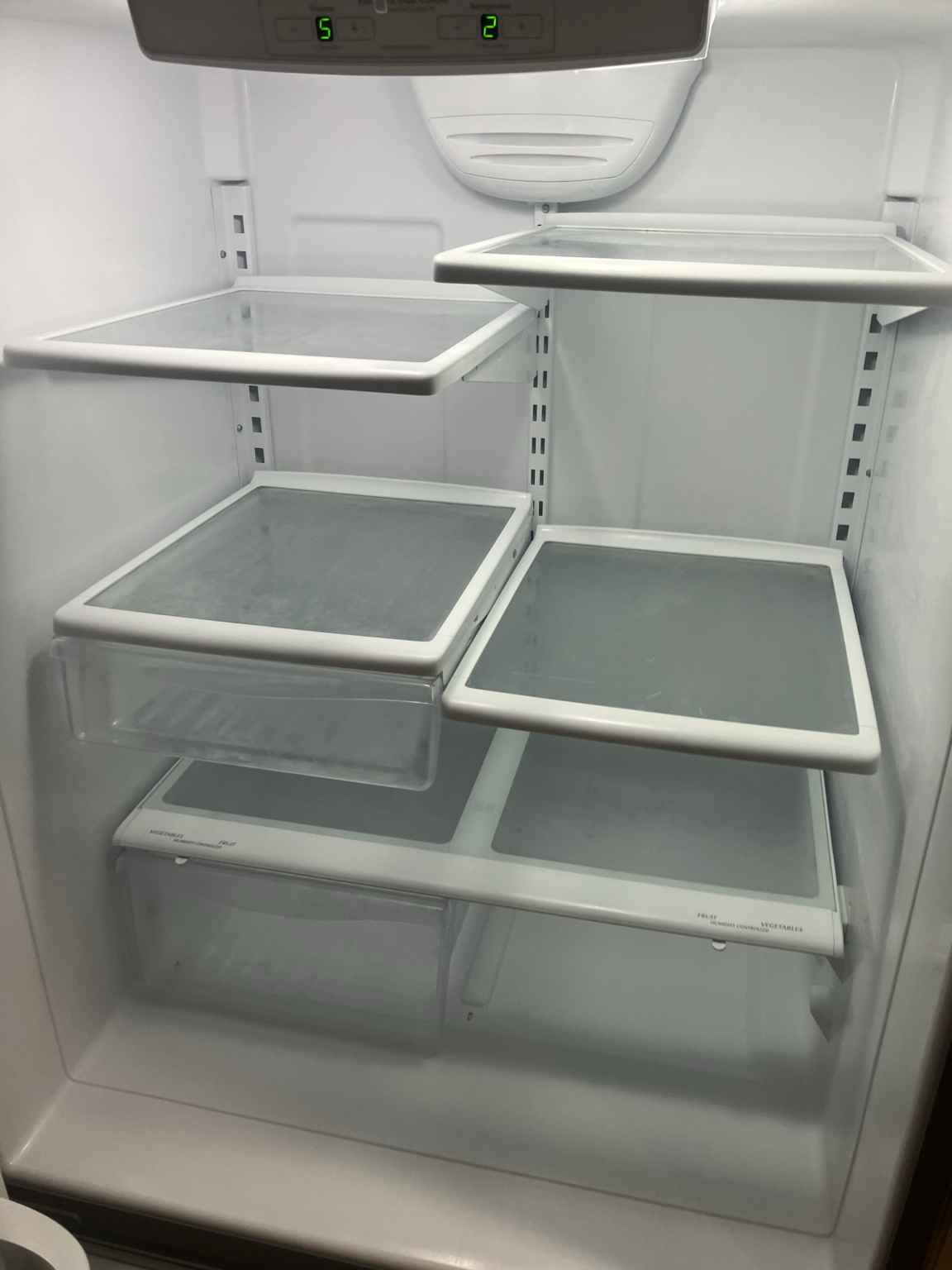
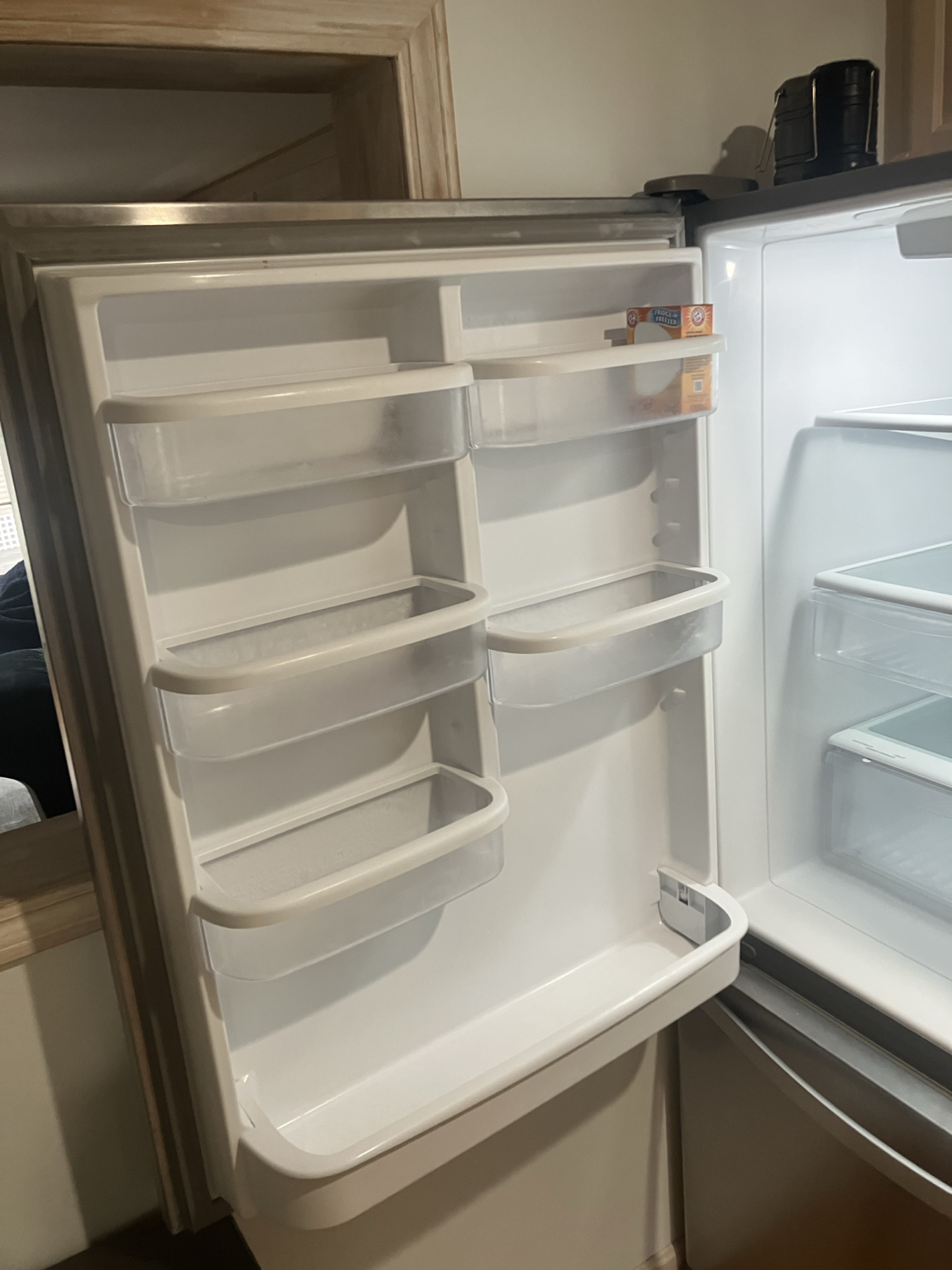
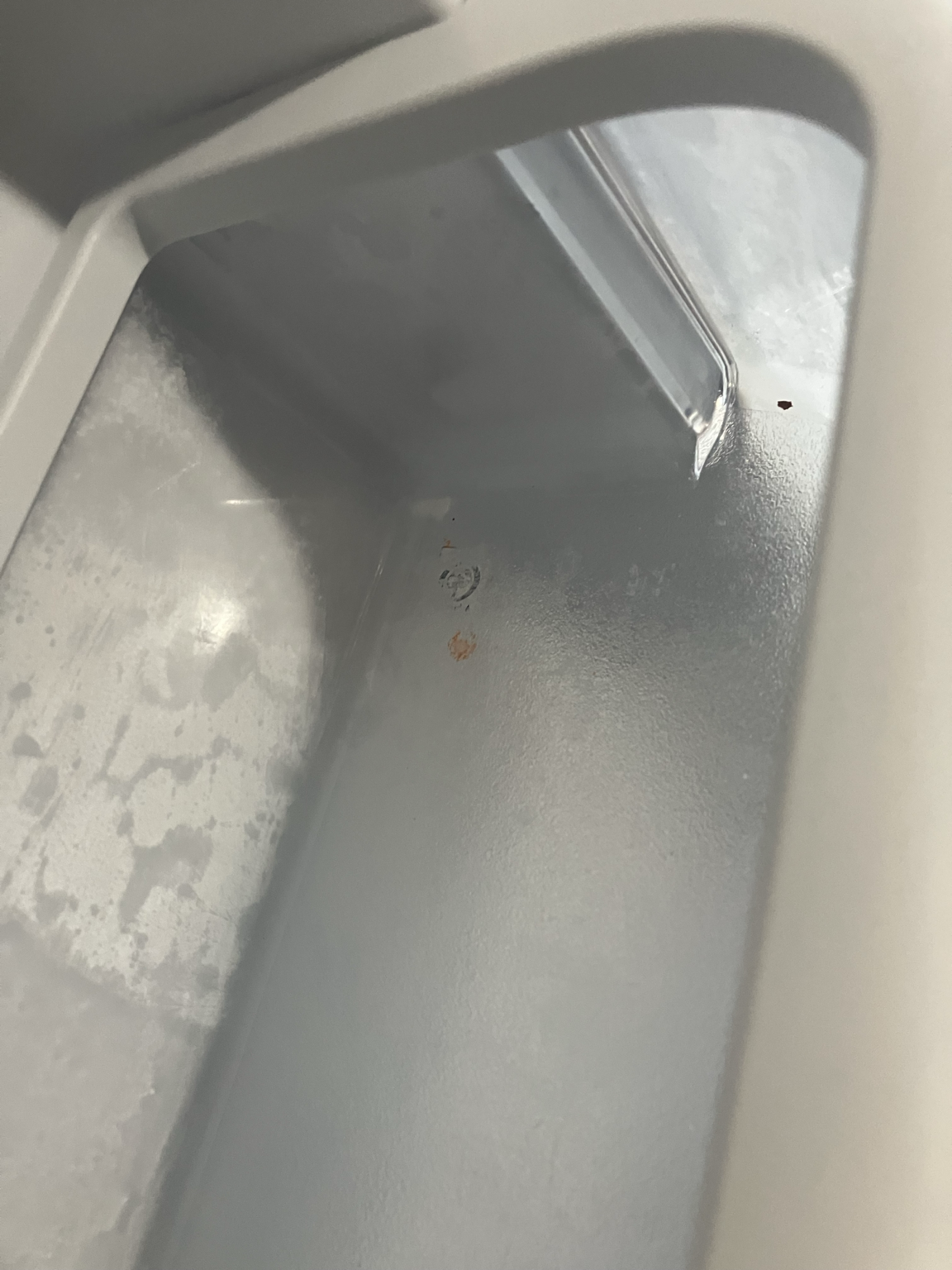
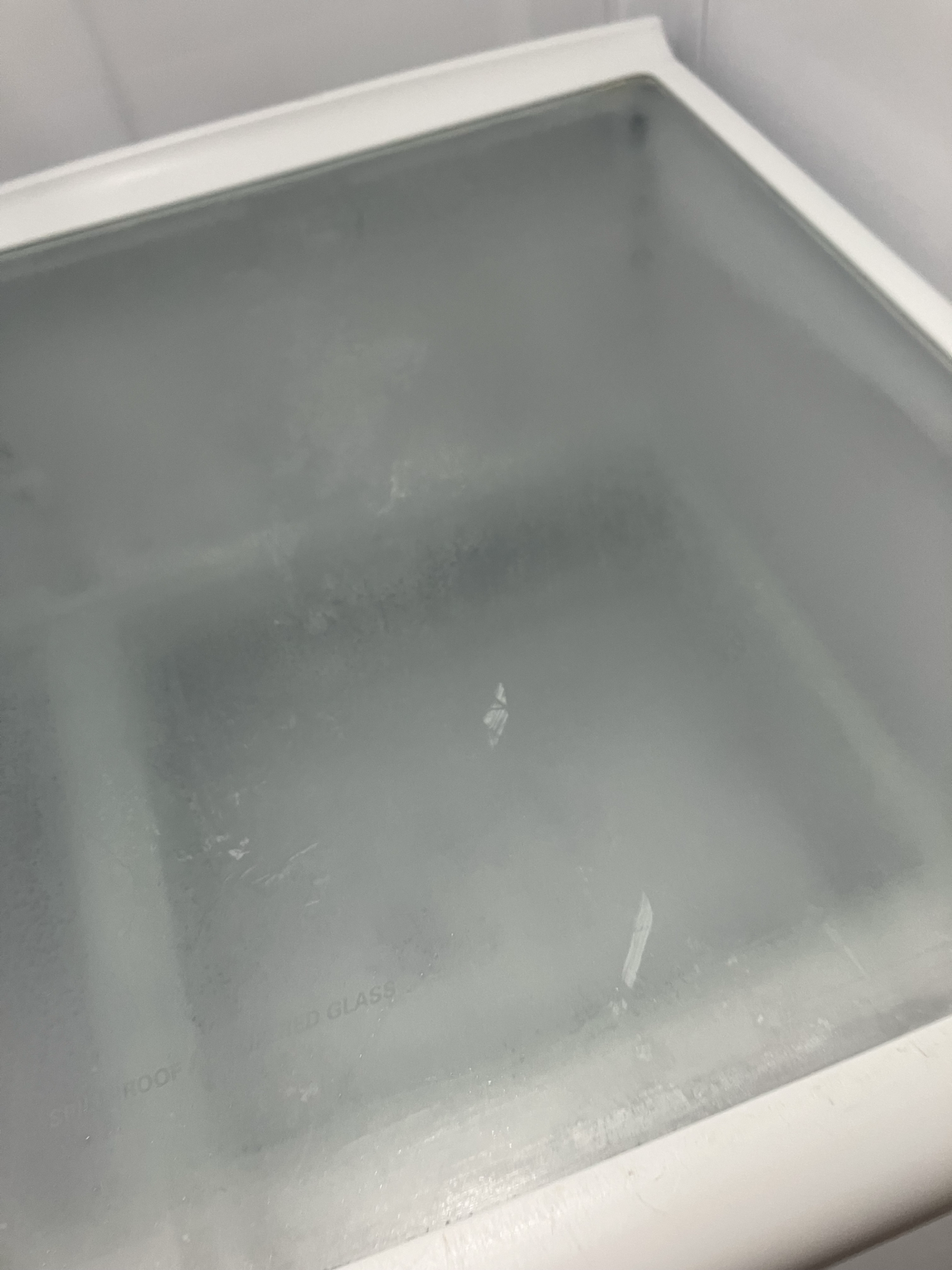
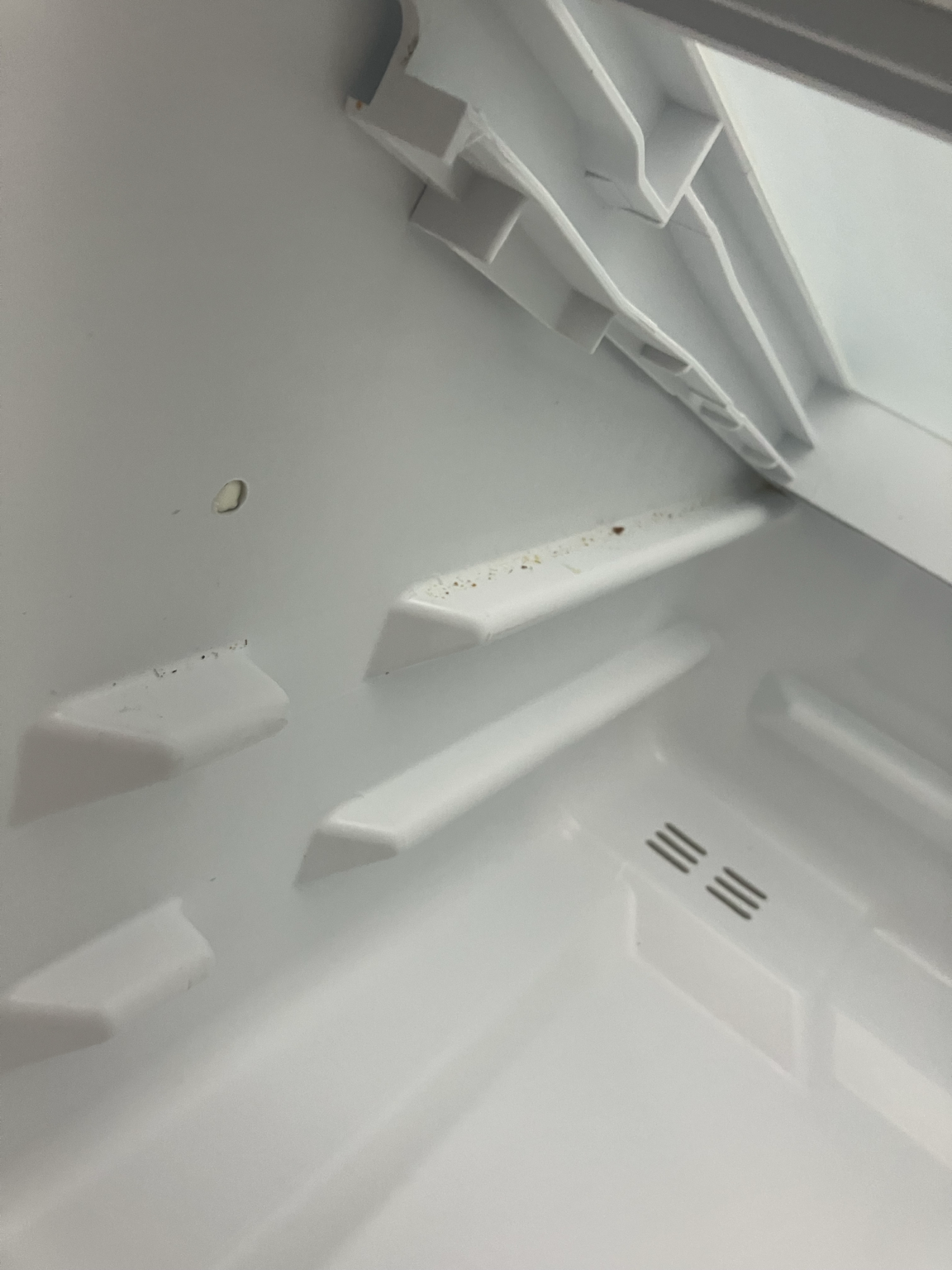
The first two photographs show exactly why refrigerator cleaning can be deceptive. From the front, the appliance reads as bright, mostly empty, and generally well kept. There is no dramatic spill or heavy visible mess demanding immediate attention. To a casual eye, it can reasonably look clean.
The standard changes when we inspect the details
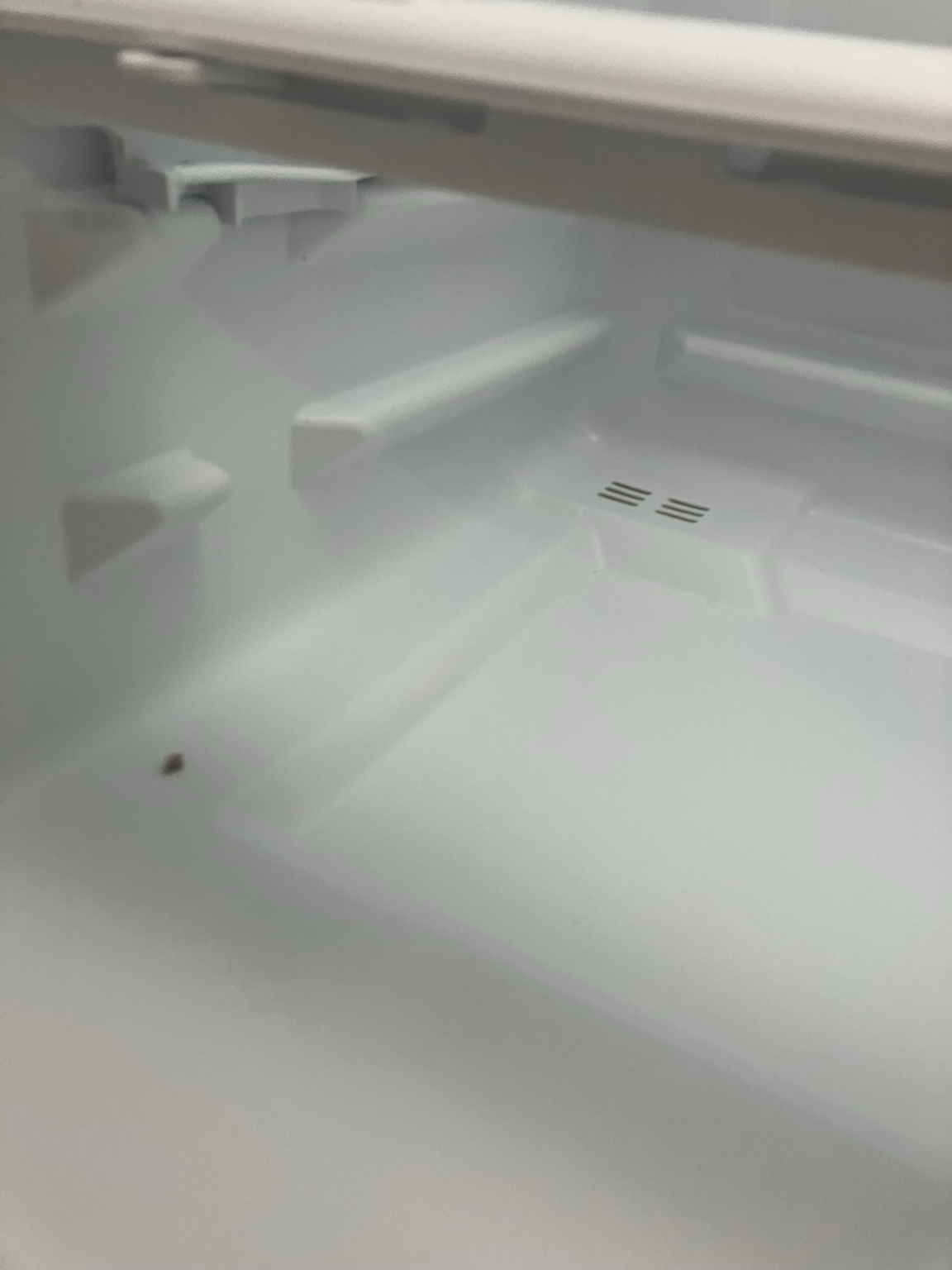
Closer inspection tells a different story. Small food particles remain on interior surfaces. Residue is visible around shelf supports and edges. Marks sit on glass and molded plastic. Debris appears in narrow areas that are easy to overlook when a refrigerator is cleaned only around the visible, accessible surfaces. In one photograph, even lifting part of a shelf reveals concealed debris underneath—exactly the kind of detail that changes the evaluation of the whole refrigerator.
These are not necessarily dramatic conditions. That is precisely the point. Professional cleaning is often defined by the small conditions that do not announce themselves from across the room.
Why refrigerator cleanliness matters beyond appearance
A refrigerator is not simply another cabinet. It is a food-storage environment. That makes routine cleanliness important for reasons that go beyond presentation.
The U.S. Food and Drug Administration advises consumers to wipe refrigerator spills immediately and to clean the refrigerator frequently. The agency specifically notes that prompt spill cleanup can help reduce the growth of Listeria and help prevent cross-contamination from one food to another. The FDA also recommends keeping the refrigerator at 40°F (4°C) or below. FDA: Refrigerator Thermometers — Cold Facts About Food Safety
FDA guidance on preventing Listeria infections reinforces the same principle: clean the refrigerator regularly, wipe spills immediately, and clean interior walls and shelves. FDA: Preventing Listeria Infections
The Centers for Disease Control and Prevention likewise recommends removing shelving, drawers, and other removable parts when a refrigerator requires a thorough cleaning, then washing those components and cleaning the inside of the empty refrigerator. That guidance illustrates an important principle: effective refrigerator cleaning involves the components and concealed contact areas—not only the open surfaces visible from the door. CDC: 5 Steps to Clean Your Refrigerator
Visible surfaces are only the beginning
A general wipe can improve the way a refrigerator looks. It can brighten glass, remove obvious crumbs, and create a better first impression. But a professional standard asks a different question: what remains after the first impression?
That means examining the edges of glass shelves, the rails and ledges that support removable components, the bottoms and corners of door storage, lower compartments, recessed areas, and the small transitions between materials where residue can collect.
The work becomes more deliberate because the objective is not simply to make the appliance photograph well from the front. The objective is to create consistency throughout the interior.
Evaluate the appliance from more than one angle and identify areas hidden by shelves, drawers, and bins.
Address edges, supports, recesses, corners, glass, and molded components rather than only broad surfaces.
The finished refrigerator should maintain the same standard when viewed up close as it does from the doorway.
Maintaining the refrigerator between deeper cleanings
The best time to address a spill is when it happens. Allowing liquids, food residue, or packaging leaks to remain gives them more time to spread, dry onto surfaces, or reach less accessible areas. A simple habit of checking for spills, expired food, and leaking containers helps prevent a small condition from becoming a deeper cleaning issue.
Keeping the refrigerator reasonably organized also makes developing conditions easier to see. Overpacking can obscure spills and residue, while the FDA notes that adequate cold-air circulation is important for keeping refrigerated foods properly chilled. A clean, orderly refrigerator therefore supports both easier inspection and responsible food storage.
Professional deep cleaning does not replace everyday food-safety practices, and household maintenance does not replace deeper professional attention when the appliance has accumulated residue in difficult areas. The two work best together: routine care protects the condition, and detailed service restores the areas that ordinary use tends to hide.
Clean should hold up under scrutiny
At Englair, the difference between “looks clean” and “is professionally clean” is found in the details. A bright refrigerator with clear shelves is a good beginning. It is not automatically the end of the work.
The smaller particles, faint residue, shelf supports, glass edges, door compartments, and hard-to-see recesses all matter because they determine whether the result is complete or merely convincing from a distance.
That standard extends beyond refrigerators. Across a home, professional cleaning is built on the same principle: the result should remain consistent when the client looks closer.
For Englair Clean Group, details are not an optional finishing touch. They are part of the definition of clean.
Authoritative references
U.S. Food & Drug AdministrationRefrigerator Thermometers — Cold Facts About Food Safety U.S. Food & Drug AdministrationWhat You Need to Know About Preventing Listeria Infections U.S. Food & Drug AdministrationFood Safety Tips for Consumers & Retailers During an Outbreak of Foodborne Illness Centers for Disease Control and Prevention5 Steps to Clean Your Refrigerator