
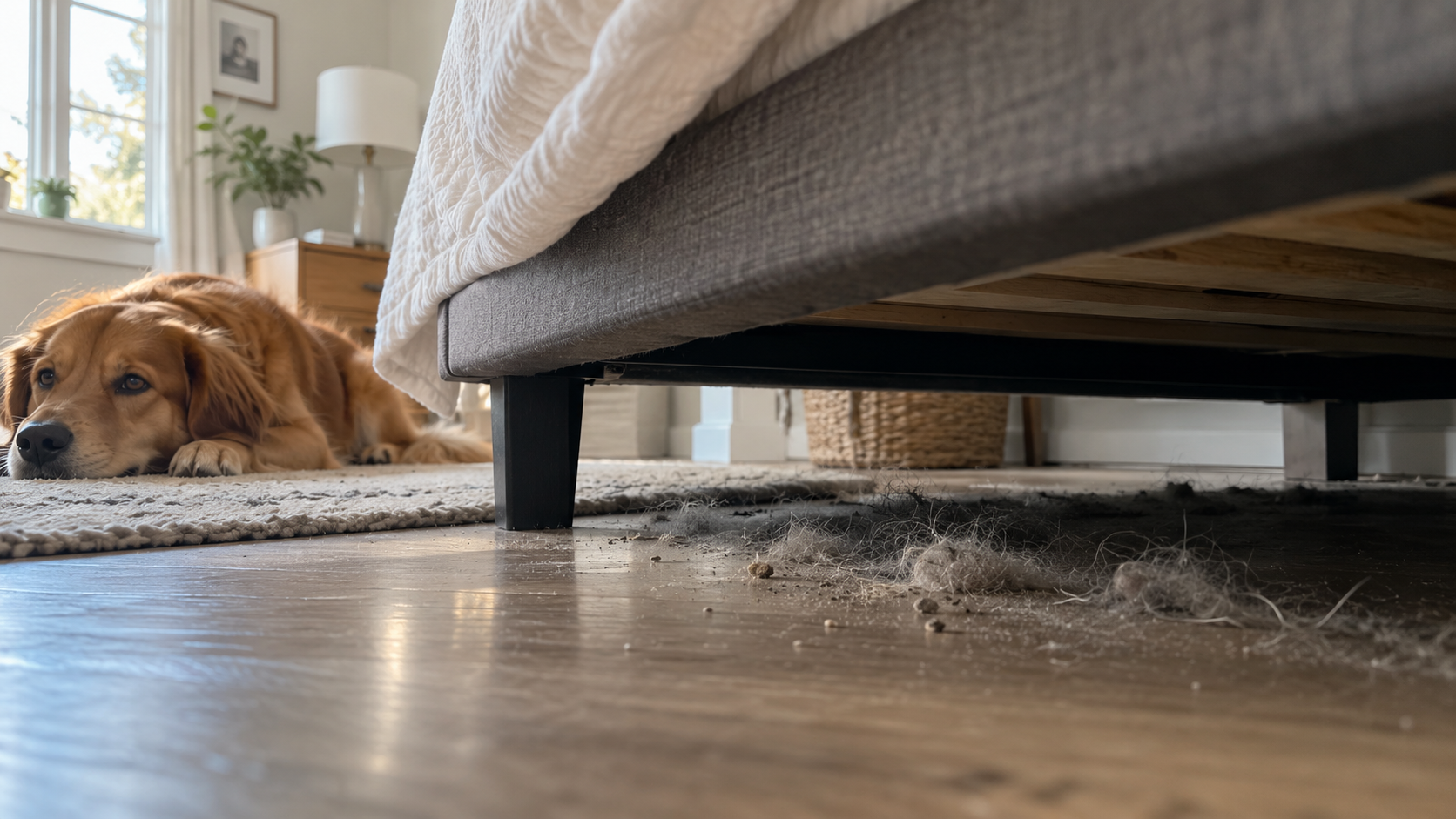
A bedroom can look perfectly clean at eye level while dust, fibers, hair, tracked-in particles and pet-related material quietly accumulate only a few inches below the bed. In homes with dogs, what is visible is only part of the story.
The point is not to make ordinary household dust sound dangerous. Dust is a normal part of indoor life. But hidden areas matter because they are easy to overlook, and because some components of household dust can act as allergens or asthma triggers for people who are already sensitive.
What actually collects under the bed?
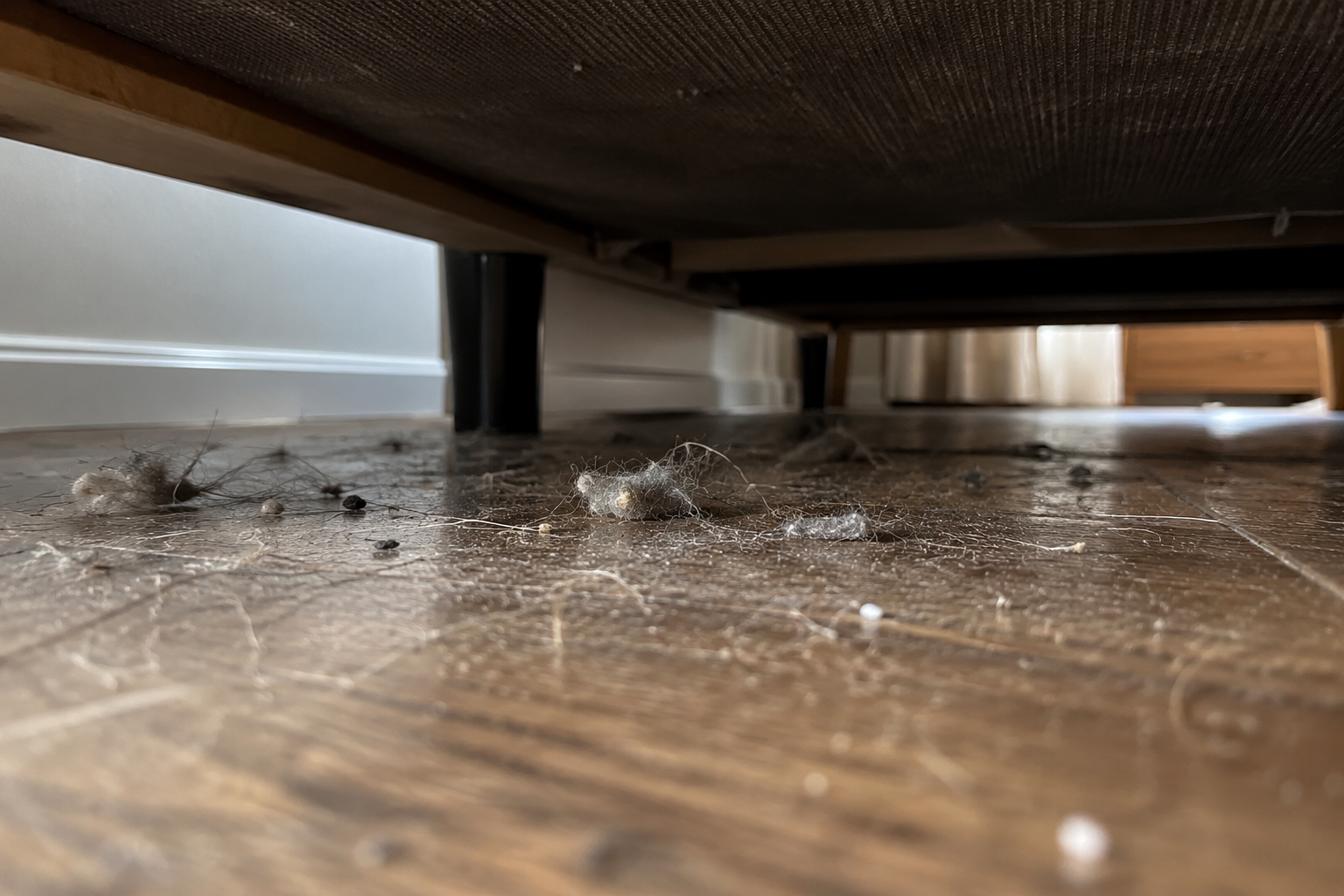
Household dust is not one substance. It is a changing mixture that can include textile fibers, hair, shed skin material, outdoor soil and fine particles carried indoors on clothing and footwear. In a home with pets, fur and other pet-associated material can become part of that mixture as well.
Under a bed, low airflow and infrequent access allow those materials to settle. Baseboards, bed legs, floor edges and stored objects can catch fibers and hair, gradually creating the familiar dust clusters that remain out of sight during ordinary day-to-day cleaning.
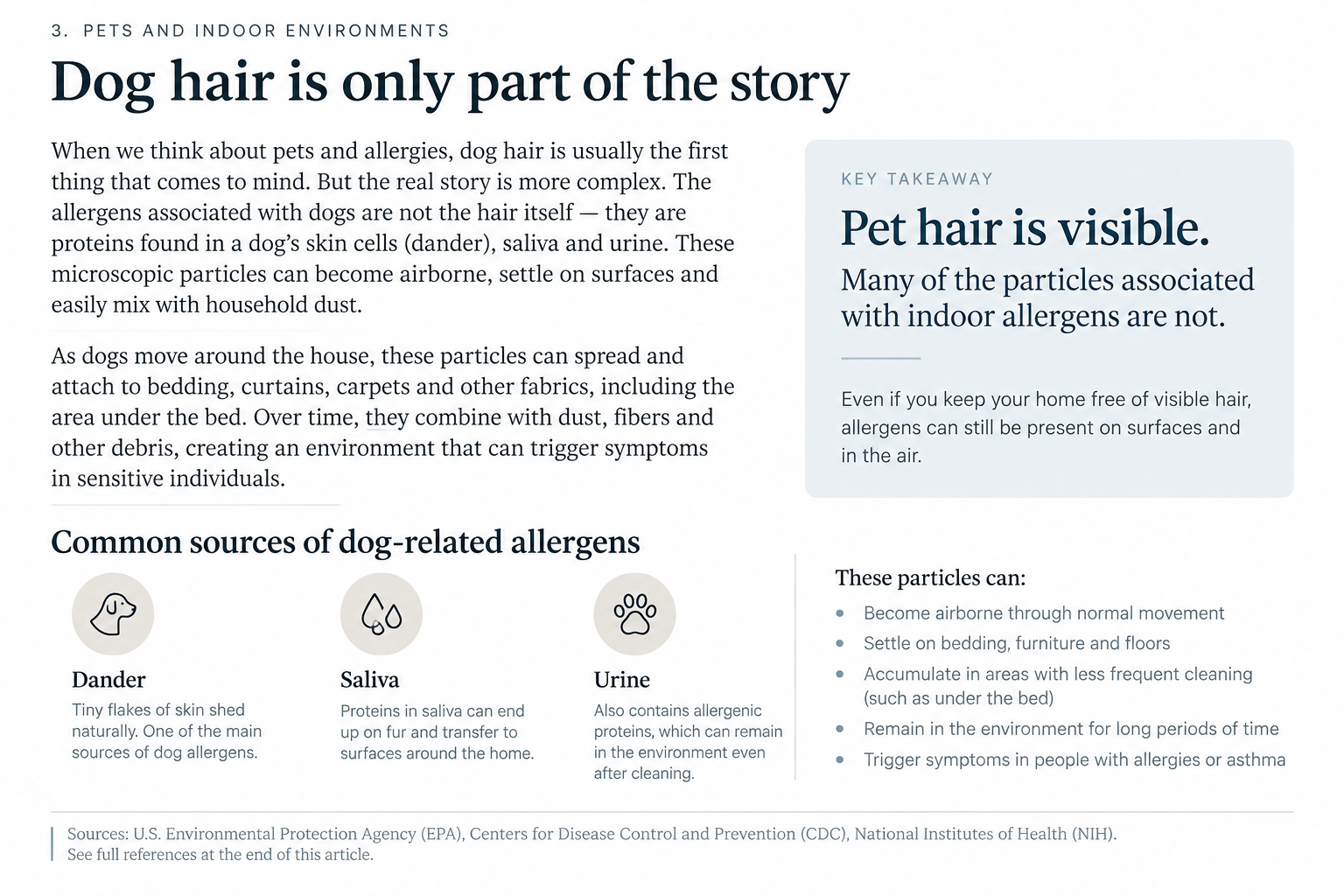
Dog hair is only part of the story
Visible fur is not the same thing as a pet allergen. The National Institute of Environmental Health Sciences explains that pet allergens are proteins associated with material such as dander, saliva and urine. Fur can also carry allergenic material and other particles through the home.
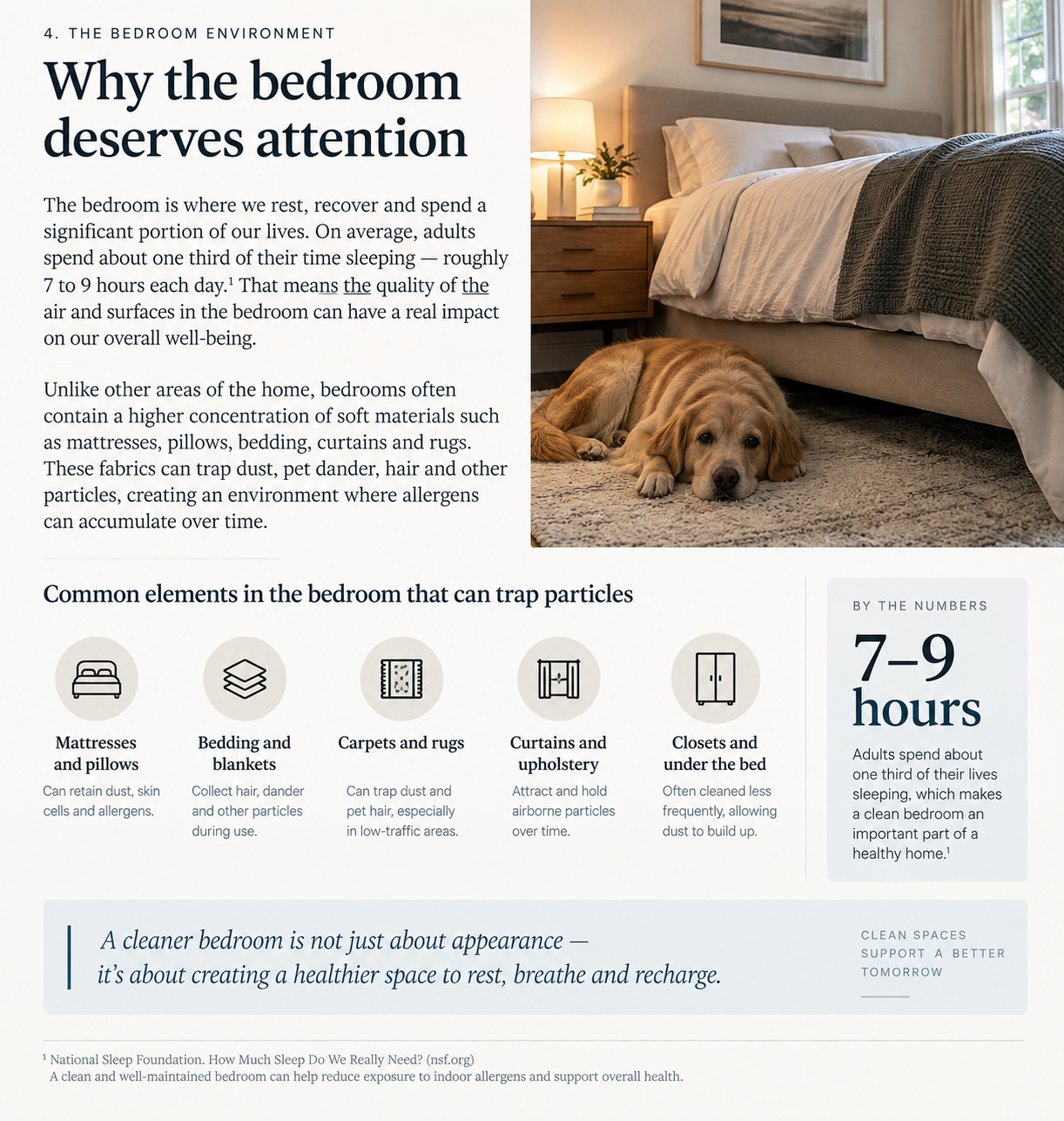
Why the bedroom deserves attention
The bedroom combines long periods of occupancy with a high concentration of soft materials: bedding, pillows, mattresses, curtains, rugs and upholstered surfaces. Those materials can collect dust and particles, while spaces beneath beds and behind furniture are often cleaned less frequently than open floor areas.
That does not mean a bedroom must be sterile. It means the room should be considered as a complete environment rather than only the surfaces visible from standing height.
When dust becomes more than a cosmetic issue
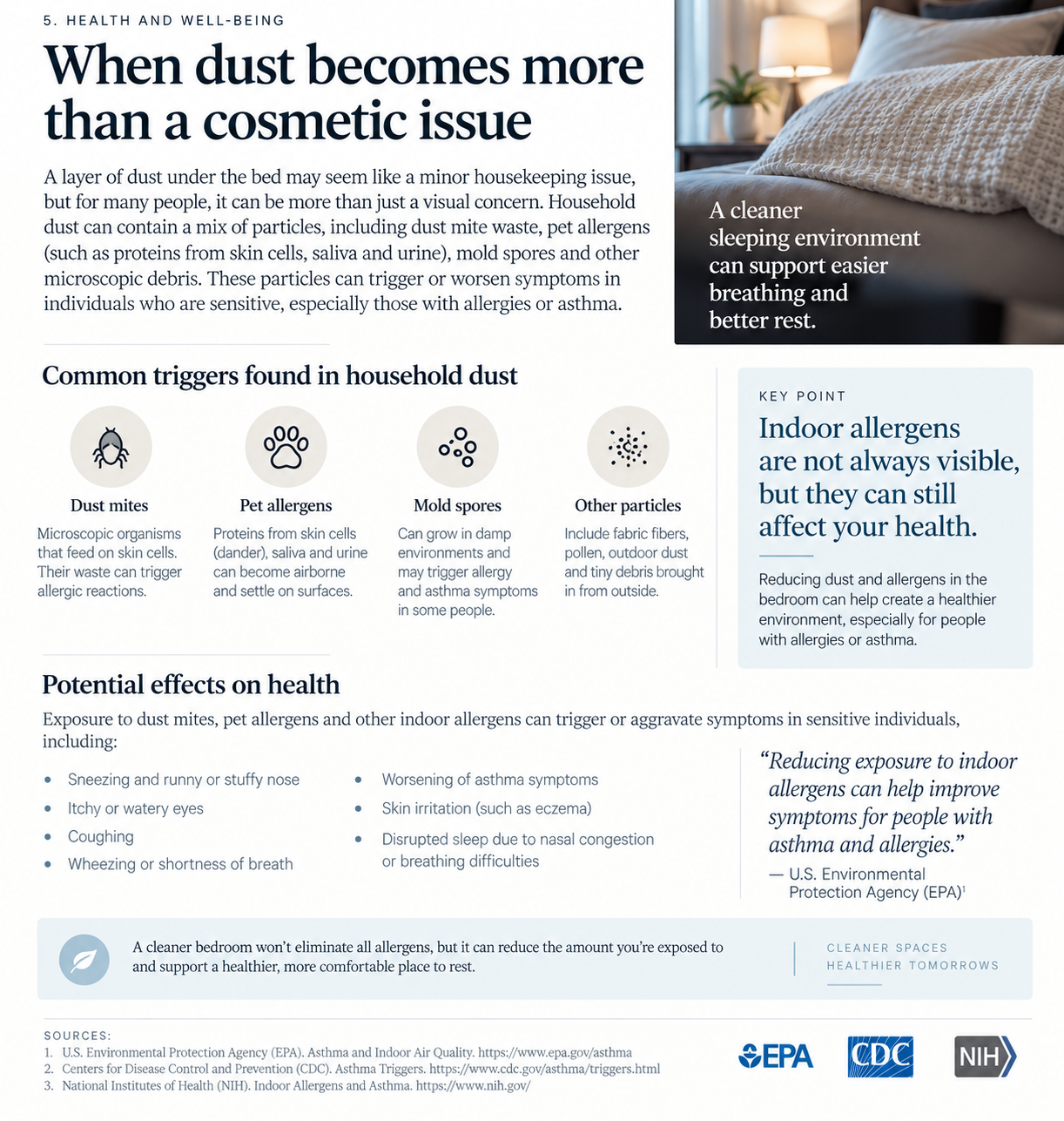
For many people, dust under a bed is primarily a housekeeping issue. For people with allergies or asthma, however, some indoor allergens can trigger or aggravate symptoms. The U.S. Environmental Protection Agency identifies dust mites and pets among common asthma triggers, while the Centers for Disease Control and Prevention provides similar guidance on reducing exposure to known triggers.
This distinction matters: the presence of dust, a dog, or pet hair does not mean that a person will develop respiratory disease. Sensitivity varies from person to person, and environmental cleaning is not a substitute for diagnosis or medical treatment.
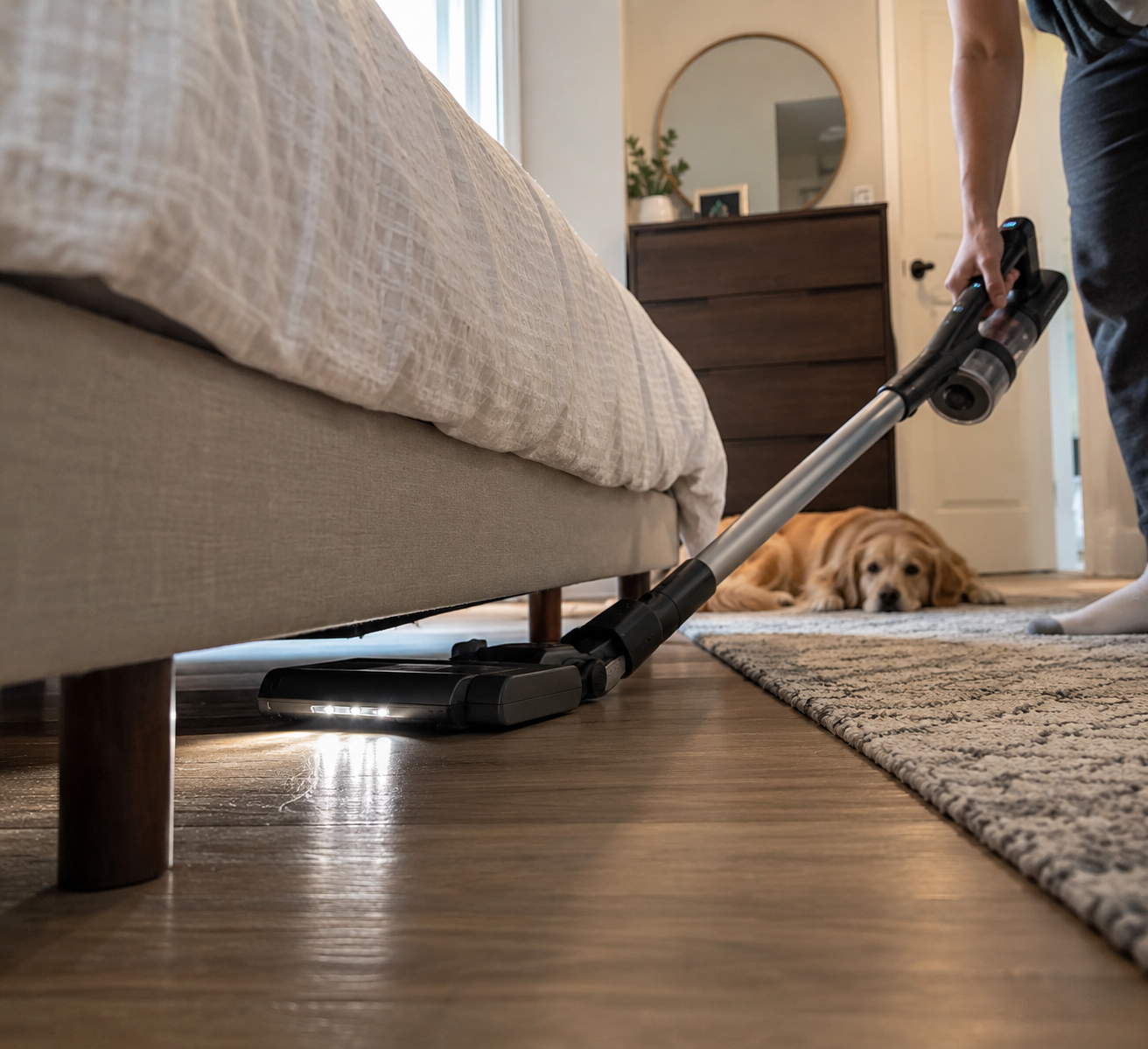
The bedroom after the hidden areas are addressed
Hidden-area cleaning does not need to become a dramatic deep-cleaning ritual. The practical objective is simply to include the whole floor area in a recurring routine. A low-profile vacuum head or extension can reach beneath many beds without turning the room upside down.
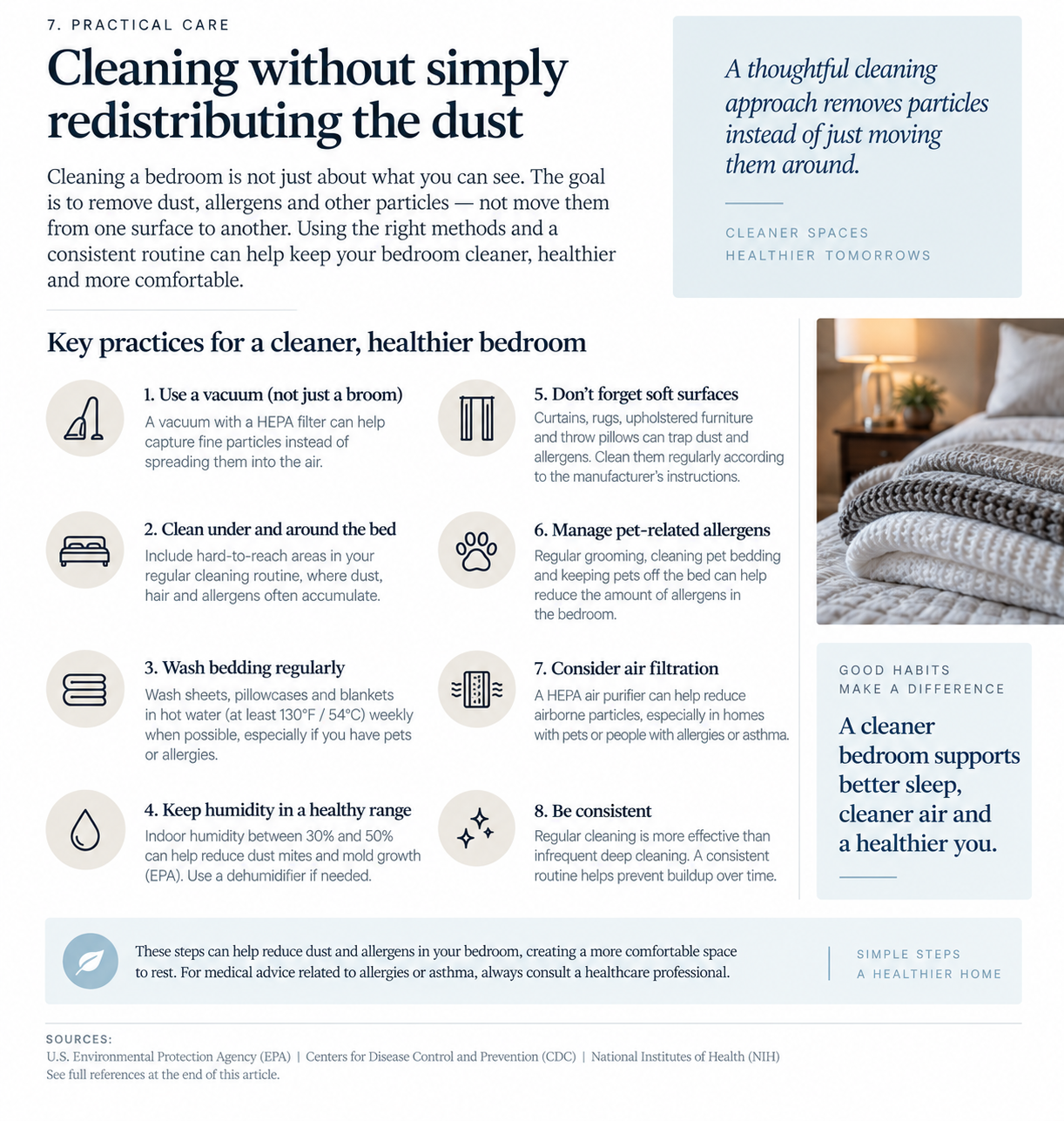
Cleaning without simply redistributing the dust
Dust control works best when particles are removed rather than repeatedly moved from one surface to another. Vacuuming can be preferable to dry sweeping where fine dust is present, and a properly maintained HEPA-equipped vacuum may help capture small particles rather than allowing some of them to remain airborne.
Bedding also deserves regular attention. Current CDC guidance for people managing asthma triggers recommends washing bedding weekly and drying it completely. Rather than treating a particular water temperature as a universal rule, follow fabric-care instructions and any individualized guidance relevant to the household.
Humidity matters as well. CDC guidance for dust-mite control recommends keeping relative humidity around 30–50 percent. In appropriate situations, HEPA air filtration can be considered as one part of a broader environmental strategy. None of these measures replaces medical care for asthma or allergy symptoms.
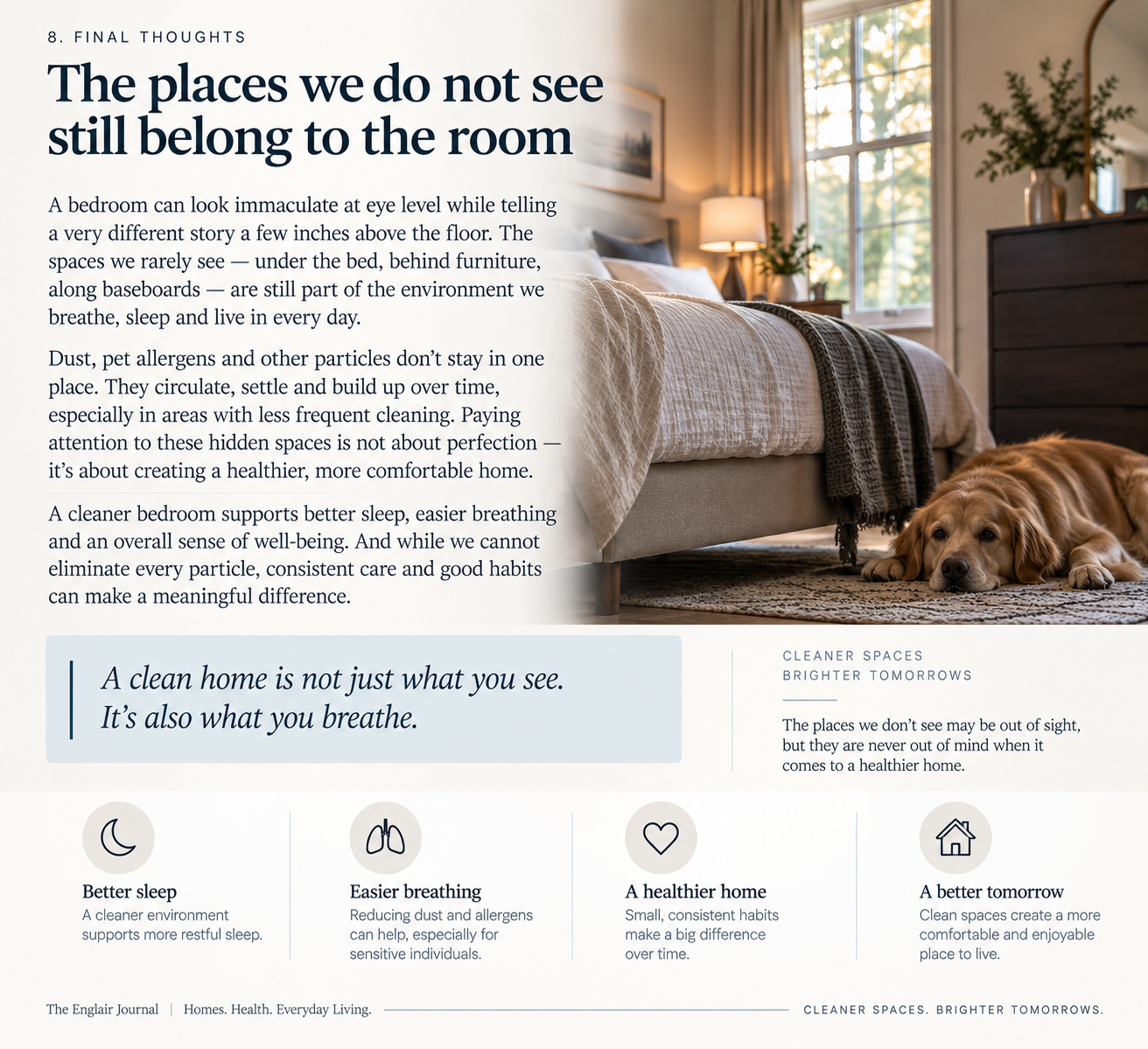
The places we do not see still belong to the room
A bedroom can look immaculate at eye level while telling a very different story a few inches above the floor. The spaces we rarely see are still part of the environment we breathe, sleep and live in every day.
The useful standard is not perfection. It is awareness: treating under-bed areas, edges, textiles and other easily forgotten surfaces as ordinary parts of the room, and maintaining them with the same consistency as everything that is immediately visible.
Authoritative references
U.S. EPAAsthma Triggers: Gain ControlCDCControlling AsthmaNIH / NIEHSPet Allergens and Health