

A beautiful home does not necessarily begin with a blank slate. Behind the reassuring appearance of a tidy room, normal life leaves its own record: fine dust along trim, cooking residue near the range, mineral deposits around fixtures, and wear that becomes visible only when someone looks closely.
For a homeowner considering a recurring cleaning schedule, that distinction matters. A first-time deep clean and an ordinary maintenance visit serve different purposes. One establishes a practical baseline; the other helps protect it.
A deep clean is not simply a longer regular clean
A recurring appointment focuses on the changes that happen between visits: everyday dust, footprints, cooking marks, bathroom use, and the normal activity of a household. The work can be consistent because the property's condition, priorities, and access are already familiar.
An initial deep clean involves a different kind of assessment. The team must first identify the condition of surfaces, distinguish fresh soil from established buildup, and determine which details need attention before recurring maintenance can work efficiently. The same room may require more careful work at its edges, fixtures, and frequently overlooked surfaces than during a later routine visit.
This is not a criticism of the people living there. A house can be thoughtfully cared for and still accumulate residue that ordinary household cleaning does not fully address. The goal is not to pursue an unrealistic notion of perfection. It is to begin with an honest understanding of what the home needs.
The difference is especially apparent in kitchens, where the most demanding work may be on surfaces the eye does not immediately notice.
Why the kitchen deserves its own assessment
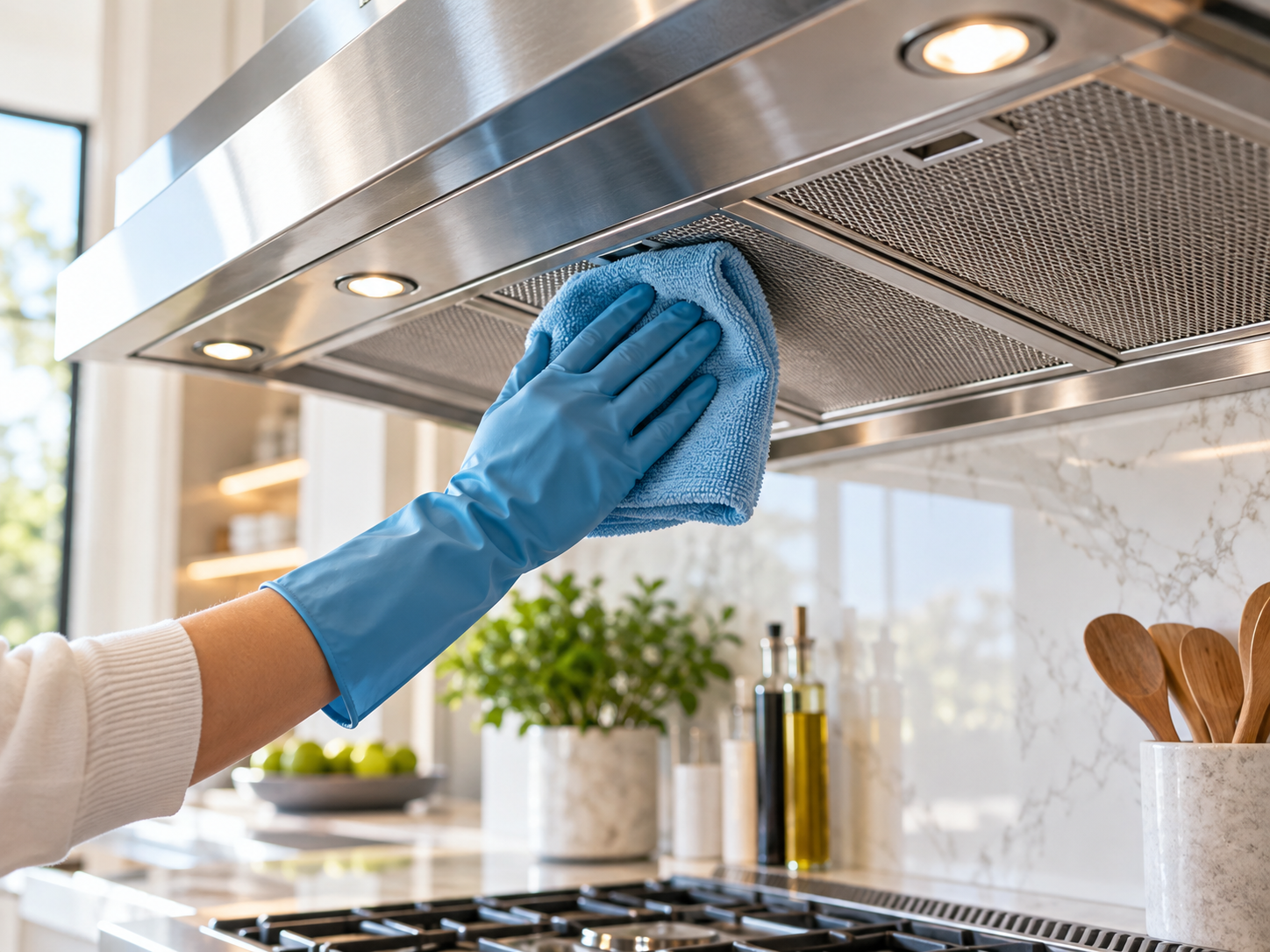
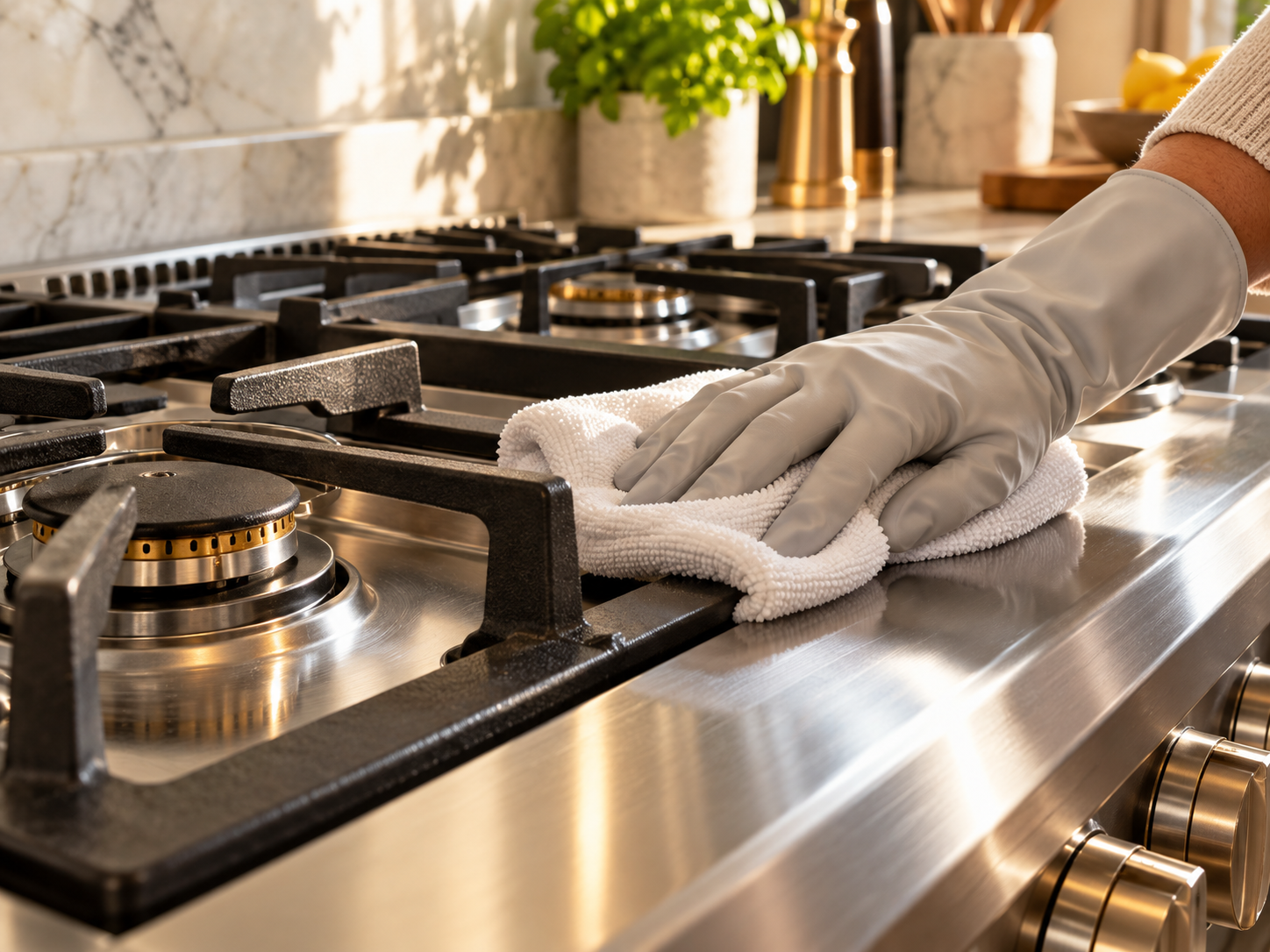
Kitchen surfaces are exposed to a mixture of cooking oils, steam, food residue, dust, fingerprints, and repeated touching. Over time, those materials can form a thin film around the range hood, backsplash, cabinet fronts, hardware, and other nearby surfaces. What appears to be a quick wipe-down may require multiple careful passes with a product suited to the finish.
The purpose is to remove the residue without damaging the material beneath it. Stainless steel, painted cabinetry, natural stone, sealed countertops, and decorative metals have different care requirements. The strongest chemical or stiffest brush is not necessarily the most professional choice.
As the CDC advises in its household-cleaning guidance, a suitable cleaner should be chosen for the surface and used according to the product instructions. Cleaning and disinfection are also different processes: routine household cleaning should not be confused with a promise to disinfect every material in the home.
Bathrooms reveal accumulation in a different way
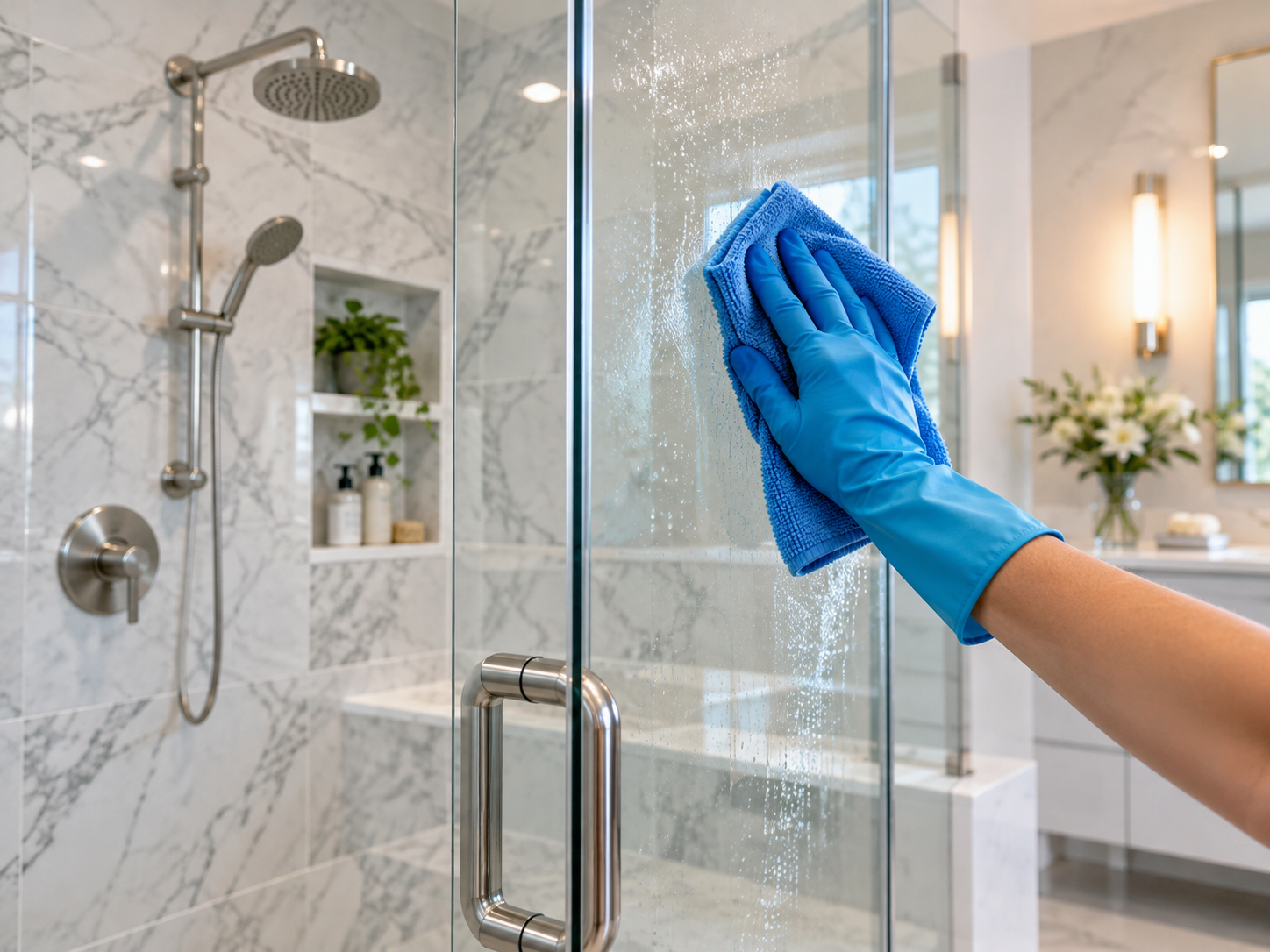
In a bathroom, the challenge is often a combination of water exposure, personal-care product residue, visible spotting, and deposits around frequently used fixtures. Shower doors, tile transitions, faucets, drain surrounds, and the bases of fittings may all need closer attention at the start of service.
Not every mark is removable through ordinary cleaning. Hard-water deposits, etched glass, aged grout discoloration, deteriorating sealant, and damaged finishes should not be treated as interchangeable problems. Some are maintenance issues; others may require restoration or repairs beyond the scope of a cleaning visit.
A clear first-visit assessment helps prevent unrealistic expectations. It also allows the team to agree on a sensible maintenance routine for the surfaces that can be kept in good condition with normal care.
The areas a regular routine can overlook
Once the most visible surfaces have been addressed, the smaller details become easier to evaluate. Baseboards, door edges, reachable trim, floor corners, switch plates, and the spaces beneath accessible furniture can accumulate material without attracting much day-to-day attention.
Bedrooms provide a useful example. A room may look orderly at standing height while fine fibers collect near bed legs or behind bedside tables. In homes with pets, hair can gather along edges and beneath furnishings even when the open floor looks clean.
The right approach is neither to ignore these areas nor to promise that everything hidden can be reached. Furniture weight, storage, fragile possessions, and physical access all affect what can safely be cleaned. A good first visit makes those limitations clear and gives the recurring plan a realistic starting point.

Why square footage never tells the entire story
Two homes with identical layouts can require very different amounts of first-time work. One may have lightly used guest rooms and regularly cared-for bathrooms. Another may have multiple pets, frequent cooking, children, high traffic, or a long interval since its last detailed cleaning.
Number of rooms and total square footage are useful starting points, but a proper estimate also considers the condition of the spaces, level of accumulation, finishes, accessibility, and any specialized tasks requested. Some substantial first-time projects are best planned across more than one day rather than compressed into an unrealistic schedule.
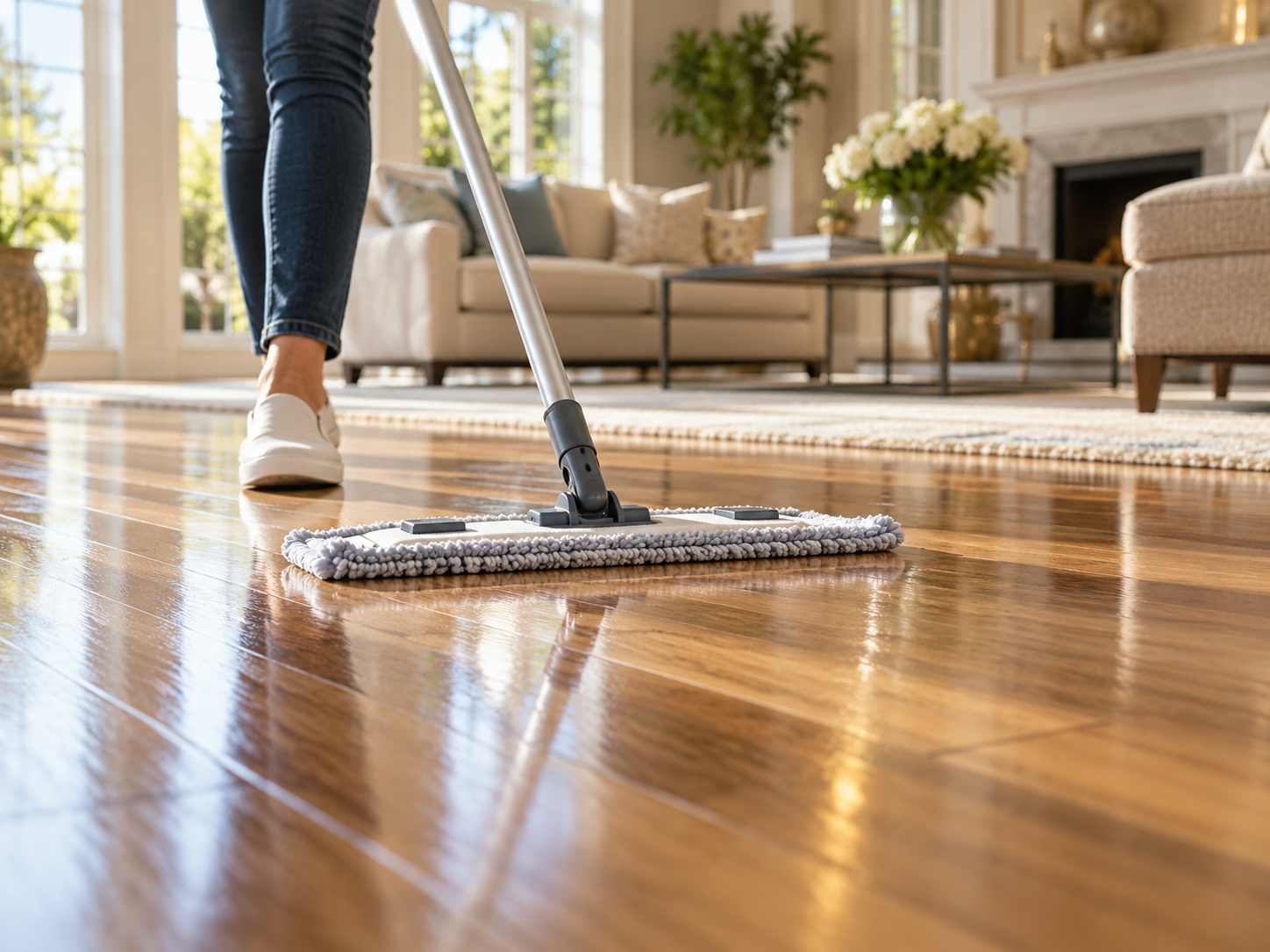
Floors are a good illustration. Hardwood, tile, laminate, and other materials may look similarly dusty, yet they require different methods. With wood floors, unnecessary moisture or unsuitable products can compromise the finish. The appropriate cleaner and technique should follow the flooring manufacturer's recommendations.
What changes once the baseline is established?
After the agreed first-time work is complete, regular visits can concentrate on maintaining conditions rather than repeatedly correcting old accumulation. The cleaner knows the house, its delicate finishes, and the areas that require more attention. The homeowner understands what the routine visit covers and what needs separate scheduling.
This shared familiarity can make recurring care more predictable. Kitchens and bathrooms remain priorities, while floors, reachable surfaces, and touchpoints are addressed according to the household's use and the agreed scope. A good schedule also allows for periodic detail work instead of assuming every deep-cleaning task belongs in every maintenance appointment.
Biweekly service may be a strong fit for some households. Others need weekly cleaning because of activity or pets, while a lower-traffic home may choose monthly visits. There is no universally correct interval: consistency depends on how quickly the property changes between appointments.

A first cleaning needs clear expectations, not vague promises
Before the appointment, it helps to discuss visible buildup, areas the homeowner most wants addressed, access to rooms and surfaces, pets, and anything that may require special handling. Photos or an in-person walkthrough can help establish a preliminary scope, although the final level of effort depends on actual conditions.
Some services should be identified separately. Inside-oven or refrigerator cleaning, extensive organizing, heavy furniture moving, junk removal, carpet extraction, post-construction dust, and restoration work are not automatically part of every residential deep clean. Safety, training, equipment, and time all matter.
At Englair Clean Group, the first visit is generally approached as a deep clean because it gives recurring service a reliable foundation. That does not mean every property receives an identical checklist or fixed amount of work. The scope should match the home rather than forcing the home into a generic package.
Maintaining a standard is an ongoing relationship
The most useful outcome of an initial deep clean is not simply the appearance of a room immediately afterward. It is the opportunity to establish a standard that can be sustained through normal life.
Homes change. Seasons bring grit and moisture into New England entryways. Family schedules become busier. Pets shed. Guests visit. A recurring plan should be able to respond to those changes without losing sight of the property's overall care.
For homeowners in Massachusetts and New Hampshire, Englair's approach is to begin with a realistic assessment, perform the agreed first-time detailing, and then design maintenance visits around how the household actually lives. A carefully established baseline is not an unnecessary extra; it is what gives regular cleaning its purpose.
Learn more about Englair's residential cleaning services, explore our perspective on building a reliable recurring cleaning plan, or request a cleaning consultation.
Further reading
CDCWhen and How to Clean and Disinfect Your Home — product selection, surface compatibility, and household cleaning guidance